

The Interview That Never Aired
On being seen, unheard, and the quiet unraveling of care in Indiana

Hi everyone,
Today I’m sharing with you something that’s really hard for me to admit—that a local TV newscaster came to our house last fall to interview Sarah and me on the then-proposed (now implemented) Indiana Waiver Reset initiative, which slashed funding for people with disabilities who were receiving services through the state’s programs.
That interview never aired. Here’s the story, and thanks for reading.
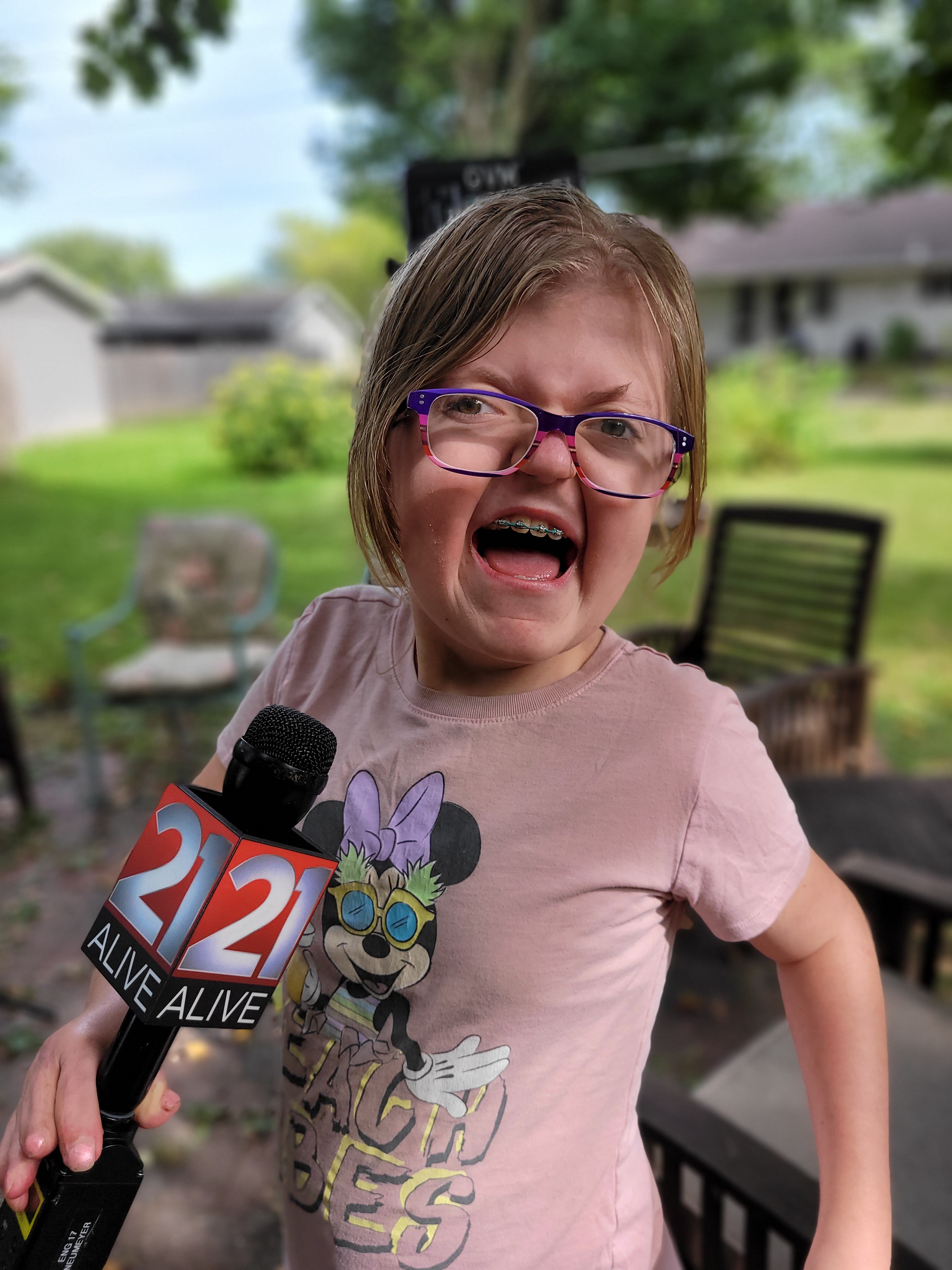
Sarah was thrilled when Meg, a newscaster from our local news channel 21Alive, arrived at our house to interview her about the proposed Waiver Reset initiative—an Indiana statewide effort to reallocate Medicaid funds based on the federal reductions. What I learned about this Waiver Reset was this: People with disabilities would likely see a reduction in the direct services they receive through Medicaid.
If you don’t know what a waiver program is, I’ll try my best to break it down potato-head style (as an ex-boyfriend once said). There are people who receive Medicaid through SSI or SSDI, but for those who don’t qualify for these programs (based on income, usually), every state in the Union has another option called the waiver program. Basically it waives the financial qualifications to receive Medicaid services, if a person—like Sarah—demonstrates a need for these services.
Because I am a documentation aficionado, I have retained every piece of evidence from the day of her official Apert syndrome diagnosis to every surgery she’s ever had and all records of other diagnoses (sleep apnea, ADHD, autism, etc.). Thankfully, because of the inch-thick stack of papers I provided to our state coordinator, Sarah qualified for what’s called the Family Support Waiver, which means she receives a pool of about $16,000 per year that can be used toward specific therapies. In her case, this includes weekly music therapy, biweekly behavior management, weekly counseling, and respite care (which is really a break for me).
The Waiver Reset proposed slashing the amount of hours of direct support that each person on the Family Support Waiver currently receives. A reduction in direct services means a reduction in overall care. For a person with autism, or at least for Sarah, it also completely upends her ability to feel secure in knowing who she will be able to see, and when, and for what therapy.
So, when I discovered this plan proposed by our legislators, I told Sarah about it and asked her what she wanted to do. “There are options,” I told her, listing a few: making a video to send to our state lawmakers, writing them, contacting the media, and letting the public know. She opted to make a video for our elected officials and have me send it in an email, but she also wanted to share her story with the media and our friends on Substack.
When I reached out to a few newscasters, I wasn’t expecting a reply. But Meg from 21Alive showed up at our house, ready for the interview. When I took the photo of Sarah holding the microphone, she said, “Mom, I feel confident and brave. I’m ready to show the world who I am,” and that somehow gutted me.
I realized that Sarah is learning to own her story by using her voice to advocate not just for herself, but for others who don’t know how to speak their truth. She wanted to put herself out there, to be in the public eye, because she told me she felt “mad and sad” that her services might be cut by the end of the year.
The day after Meg interviewed both Sarah and me, she texted me. “I can’t find the documentation about the specific services that are being cut,” she wrote. “And if I can’t use the proof, I can’t air the interview.”
I told her I understood and spent the day scrambling to find the official report that was given to me by Sarah’s case manager. But it was gone. When I emailed her case manager, she directed me to the Bureau of Developmental Disabilities (BDDS) website, but I couldn’t find anything anywhere that was written in clear, concise language about the Waiver Reset.
The result is that the interview never aired. And that broke my heart, because the truth was unverifiable in the way bureaucracy defines it. To me, Sarah’s lived reality is the verification, yet systems demand proof that often comes too late—or is erased altogether.
What happens to stories that vanish before they’re told?
I wonder why people with disabilities often become visible only when their stories can easily be understood, resolved, or presented as “inspirational.” The messy truth is that the systems (in this case, the government system) erode support without accountability, and the public remains unaware of what’s really going on behind the scenes.
As a mother of a daughter with a disability, I feel convicted in bearing witness to Sarah’s lived experience—and to those people with disabilities everywhere—even when the world turns a blind eye or shuns the painful truth of what life is like for both the person with the diagnosis and their caregivers.
In publishing this essay, I’m airing the story. I’m honoring Sarah’s desire to be brave and put herself into a world that can be cunning and cruel. I’m honoring the truth that many caregivers, depleted and weary, fade into the background because they are overworked, overwhelmed, and unacknowledged.
Maybe the interview itself didn’t air, but this is the story—Sarah’s story, the people’s story—that needs to be heard. Thank you for lending your eyes and ears to receive it today.
A quick reminder that our monthly Zoom gathering with Sarah and me for our paid subscribers will be on Saturday, May 16th at 3 PM Eastern. We’ll be talking about “Repair, Not Perfection,” on how showing up as we are is what matters more than what we say or do.
This is so many things. Infuriating. Heart wrenching. Mystifying. I admire and am taking so much encouragement from your story, though. There are so many people standing up, telling their stories, making others listen. It’s such hard work, and easy to get discouraged if we only look at the “outcomes”. But the inspiration we’re giving each other by living in our values and integrity… who knows where that will lead?
My heart breaks for the cuts to services that so many require. More so, my heart breaks for your brave girl who put herself out there and too quickly became unseen, unheard…cut. Rather than bleed, she shares kindness💞